> For the complete documentation index, see [llms.txt](https://ghoulsec.gitbook.io/ghoulsec-vault/llms.txt). Markdown versions of documentation pages are available by appending `.md` to page URLs; this page is available as [Markdown](https://ghoulsec.gitbook.io/ghoulsec-vault/server-are-fun/servers/windows-sever/ad-users-and-groups.md).

# AD Users & Groups

<figure><img src="https://2332860236-files.gitbook.io/~/files/v0/b/gitbook-x-prod.appspot.com/o/spaces%2Fq6mjlFfyDOi3mV0lemKE%2Fuploads%2FCFEojwyYwfJwM4XBNTra%2Fimage.png?alt=media&amp;token=32c12878-8a55-4dfc-9faa-00cf761a6b07" alt=""><figcaption></figcaption></figure>

#### **Active Directory Users & Groups**:

* **Active Directory (AD) Users**: These are individual accounts representing people or devices within a domain. Each user has a unique identifier (username) and credentials (password) to access network resources.
* **Active Directory Groups**: Groups are collections of user accounts, which allow you to manage permissions and access to resources more easily. Instead of assigning permissions to individual users, you assign them to groups, which simplifies user management.

#### **Organizational Units (OUs), Users & Groups**:

* **Organizational Units (OUs)**: These are containers within Active Directory that help organize and manage users, groups, and other resources. OUs make it easier to apply policies, delegate administration, and structure the AD hierarchy. For example, an OU could represent a department like "HR" or "IT."

We will now configure the AD Users & Groups :&#x20;

***

## Active Directory Users & Groups

<figure><img src="https://2332860236-files.gitbook.io/~/files/v0/b/gitbook-x-prod.appspot.com/o/spaces%2Fq6mjlFfyDOi3mV0lemKE%2Fuploads%2FUnaJsKg2ki8gaFXfiTrJ%2Fimage.png?alt=media&amp;token=f5246ca4-70ff-4c8b-a689-b0424c30999b" alt=""><figcaption></figcaption></figure>

<figure><img src="https://2332860236-files.gitbook.io/~/files/v0/b/gitbook-x-prod.appspot.com/o/spaces%2Fq6mjlFfyDOi3mV0lemKE%2Fuploads%2FfV8sjuxqholL55jc32sd%2Fimage.png?alt=media&amp;token=22c6e20d-1b20-4af4-b813-00788116b4ea" alt=""><figcaption></figcaption></figure>

<figure><img src="https://2332860236-files.gitbook.io/~/files/v0/b/gitbook-x-prod.appspot.com/o/spaces%2Fq6mjlFfyDOi3mV0lemKE%2Fuploads%2F17KpXWXhhI8u04jVwj77%2Fimage.png?alt=media&amp;token=50ea841b-bfa7-4480-89dd-33a72b4c4ed7" alt=""><figcaption></figcaption></figure>

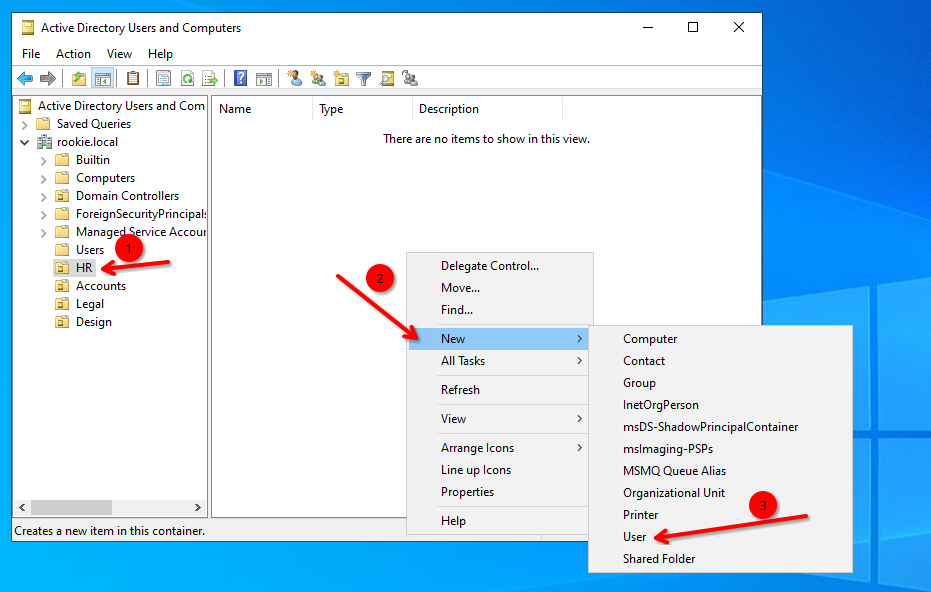
Here we can see our AD domains and we we first create OUs named as departments like HR, Legal , Accounts & etc

<figure><img src="https://2332860236-files.gitbook.io/~/files/v0/b/gitbook-x-prod.appspot.com/o/spaces%2Fq6mjlFfyDOi3mV0lemKE%2Fuploads%2FfE8y8zgthhm0kUvlEBgz%2Fimage.png?alt=media&amp;token=7d4959e6-3b94-4acb-862a-97f13bb4661a" alt=""><figcaption></figcaption></figure>

<figure><img src="https://2332860236-files.gitbook.io/~/files/v0/b/gitbook-x-prod.appspot.com/o/spaces%2Fq6mjlFfyDOi3mV0lemKE%2Fuploads%2Fh7ff9eCVDVugRkkay5bo%2Fimage.png?alt=media&amp;token=603dd085-c3b7-44e8-9110-8cdb38fce3cd" alt=""><figcaption></figcaption></figure>

<figure><img src="https://2332860236-files.gitbook.io/~/files/v0/b/gitbook-x-prod.appspot.com/o/spaces%2Fq6mjlFfyDOi3mV0lemKE%2Fuploads%2Fz1dlkvn5tnn099kUIGDs%2Fimage.png?alt=media&amp;token=8a4e21fe-372b-473b-b09b-2eae9278380c" alt=""><figcaption></figcaption></figure>

Similiarly we have created the following OUs with the same steps given above. Now we will create some users in all of the OUs we just created.

#### Creating Users :&#x20;

<figure><img src="https://2332860236-files.gitbook.io/~/files/v0/b/gitbook-x-prod.appspot.com/o/spaces%2Fq6mjlFfyDOi3mV0lemKE%2Fuploads%2FU9trEOdbYeEWOVoF9u0D%2Fimage.png?alt=media&amp;token=dfafef22-0031-41ef-9ca9-aa19df0ca1a0" alt=""><figcaption></figcaption></figure>

<figure><img src="https://2332860236-files.gitbook.io/~/files/v0/b/gitbook-x-prod.appspot.com/o/spaces%2Fq6mjlFfyDOi3mV0lemKE%2Fuploads%2FGcYkLxJG3cptARWgfHow%2Fimage.png?alt=media&amp;token=c9e8bd2f-faa5-4bd6-9935-e82546f27d4b" alt=""><figcaption></figcaption></figure>

<figure><img src="https://2332860236-files.gitbook.io/~/files/v0/b/gitbook-x-prod.appspot.com/o/spaces%2Fq6mjlFfyDOi3mV0lemKE%2Fuploads%2FWwofjYnG0RQbuICdCCPI%2Fimage.png?alt=media&amp;token=072c3351-58f3-4027-bd3e-72e3aeb89890" alt=""><figcaption></figcaption></figure>

<figure><img src="https://2332860236-files.gitbook.io/~/files/v0/b/gitbook-x-prod.appspot.com/o/spaces%2Fq6mjlFfyDOi3mV0lemKE%2Fuploads%2F9fNGWejvKKtcsctnUS16%2Fimage.png?alt=media&amp;token=cb2c3ea0-3326-4667-a4b2-c3bc93ec93cf" alt=""><figcaption></figcaption></figure>

Similiarly we can create users in all the OUs and now we will add this user in the HR groups so we can manage the AD users within the group level permissions to effectively manage the AD Users&#x20;

Now we will be creating groups in the AD users & Groups application under the OUs just created and add the users into it :&#x20;

<figure><img src="https://2332860236-files.gitbook.io/~/files/v0/b/gitbook-x-prod.appspot.com/o/spaces%2Fq6mjlFfyDOi3mV0lemKE%2Fuploads%2F17KpXWXhhI8u04jVwj77%2Fimage.png?alt=media&amp;token=50ea841b-bfa7-4480-89dd-33a72b4c4ed7" alt=""><figcaption></figcaption></figure>

<figure><img src="https://2332860236-files.gitbook.io/~/files/v0/b/gitbook-x-prod.appspot.com/o/spaces%2Fq6mjlFfyDOi3mV0lemKE%2Fuploads%2FTnhrSyLArrbk3bYtOahf%2Fimage.png?alt=media&amp;token=98499262-631a-42b8-8efd-f3b754e49fd1" alt=""><figcaption></figcaption></figure>

<figure><img src="https://2332860236-files.gitbook.io/~/files/v0/b/gitbook-x-prod.appspot.com/o/spaces%2Fq6mjlFfyDOi3mV0lemKE%2Fuploads%2Fpt1rRIiBprXE8LVw9TId%2Fimage.png?alt=media&amp;token=bdcfb4e9-6948-478b-adc7-e1c52fe6e286" alt=""><figcaption></figcaption></figure>

<figure><img src="https://2332860236-files.gitbook.io/~/files/v0/b/gitbook-x-prod.appspot.com/o/spaces%2Fq6mjlFfyDOi3mV0lemKE%2Fuploads%2FZDZzpMxoGXH9BtZc0bcK%2Fimage.png?alt=media&amp;token=e8f28d1b-bc37-4cb8-8572-2341e026a59d" alt=""><figcaption></figcaption></figure>

Here we have sucessfully configured the groups inside the OUs and now we will be adding users into it&#x20;

<figure><img src="https://2332860236-files.gitbook.io/~/files/v0/b/gitbook-x-prod.appspot.com/o/spaces%2Fq6mjlFfyDOi3mV0lemKE%2Fuploads%2FrOgoxNHXG2ii8ZzCUZnr%2Fimage.png?alt=media&amp;token=70e4aec0-8b2e-4e05-9596-f618834627b6" alt=""><figcaption></figcaption></figure>

<figure><img src="https://2332860236-files.gitbook.io/~/files/v0/b/gitbook-x-prod.appspot.com/o/spaces%2Fq6mjlFfyDOi3mV0lemKE%2Fuploads%2FMmEiRRsOy4JLkMLFibkD%2Fimage.png?alt=media&amp;token=a8d840a1-836c-4f74-b33f-3081a6703c96" alt=""><figcaption></figcaption></figure>

<figure><img src="https://2332860236-files.gitbook.io/~/files/v0/b/gitbook-x-prod.appspot.com/o/spaces%2Fq6mjlFfyDOi3mV0lemKE%2Fuploads%2FaGmFgumTaq3vC0eu6k8a%2Fimage.png?alt=media&amp;token=b0f0cddb-ee31-49e6-b614-b3899d048f10" alt=""><figcaption></figcaption></figure>

<figure><img src="https://2332860236-files.gitbook.io/~/files/v0/b/gitbook-x-prod.appspot.com/o/spaces%2Fq6mjlFfyDOi3mV0lemKE%2Fuploads%2FiI8RTihqnpYyPMrHaoGA%2Fimage.png?alt=media&amp;token=31c10db0-eedf-45e5-8a27-6e4c4ce96767" alt=""><figcaption></figcaption></figure>

Now we have added the `hruser` inside the `Rookie -HR` group inside the `HR` OU & now the user can be managed individually and also with the group making the AD management easier.&#x20;

<figure><img src="https://2332860236-files.gitbook.io/~/files/v0/b/gitbook-x-prod.appspot.com/o/spaces%2Fq6mjlFfyDOi3mV0lemKE%2Fuploads%2Fw2c5iVBohid74aZRq9YT%2Fimage.png?alt=media&amp;token=1542927f-1c33-4db7-a76e-a21c018b7c2f" alt=""><figcaption></figcaption></figure>

Similiarly we can create users in all the OUs and manage them accordingly with the groups inside the same OUs. So now we have sucessfully configured the AD users & groups now we will learn how to add the AD users into the Domain Administrators group

Lets say we need the OU - IT users to be access the domain rights of the AD domain controller we can follow the following steps :&#x20;

#### Making Users the Admin of domain controllers

<figure><img src="https://2332860236-files.gitbook.io/~/files/v0/b/gitbook-x-prod.appspot.com/o/spaces%2Fq6mjlFfyDOi3mV0lemKE%2Fuploads%2F69qkRglQxRmIs2FZQtKM%2Fimage.png?alt=media&amp;token=6f1ccfd0-bf27-4b18-ae3f-d028b9c90e26" alt=""><figcaption></figcaption></figure>

<figure><img src="https://2332860236-files.gitbook.io/~/files/v0/b/gitbook-x-prod.appspot.com/o/spaces%2Fq6mjlFfyDOi3mV0lemKE%2Fuploads%2FiyQmC0afPwsq5rt3zmyo%2Fimage.png?alt=media&amp;token=e69097c2-9df8-4159-a78f-ea6095a6ca77" alt=""><figcaption></figcaption></figure>

<figure><img src="https://2332860236-files.gitbook.io/~/files/v0/b/gitbook-x-prod.appspot.com/o/spaces%2Fq6mjlFfyDOi3mV0lemKE%2Fuploads%2FLthFLwMgBCkDxeUOjWtA%2Fimage.png?alt=media&amp;token=b56e846d-2d46-4ebf-8a6e-73973e13109f" alt=""><figcaption></figcaption></figure>

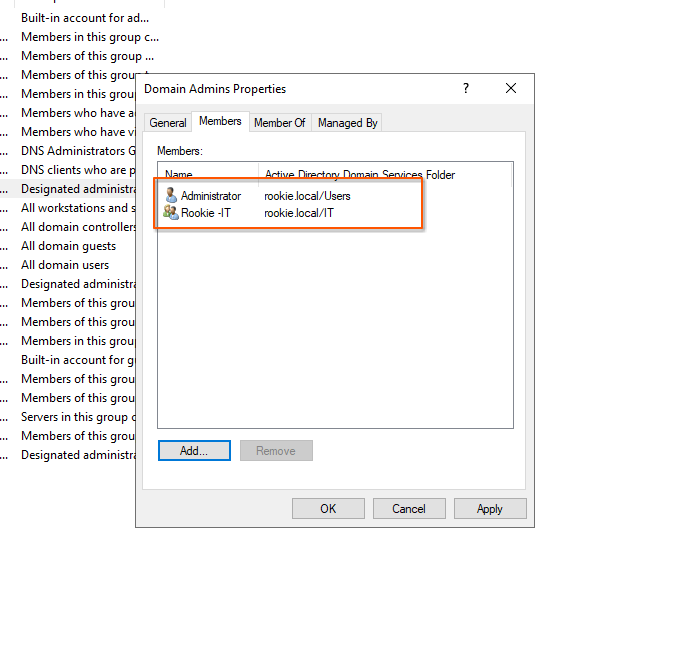
As we can see the domain administrator user is also the part of Domain Admins group so we can add out `Rookie-IT` group to provide domain admin access to the IT guys.

Here we have learn the AD users , OU , groups & now we will learn how to setup AD File server in the next section.